
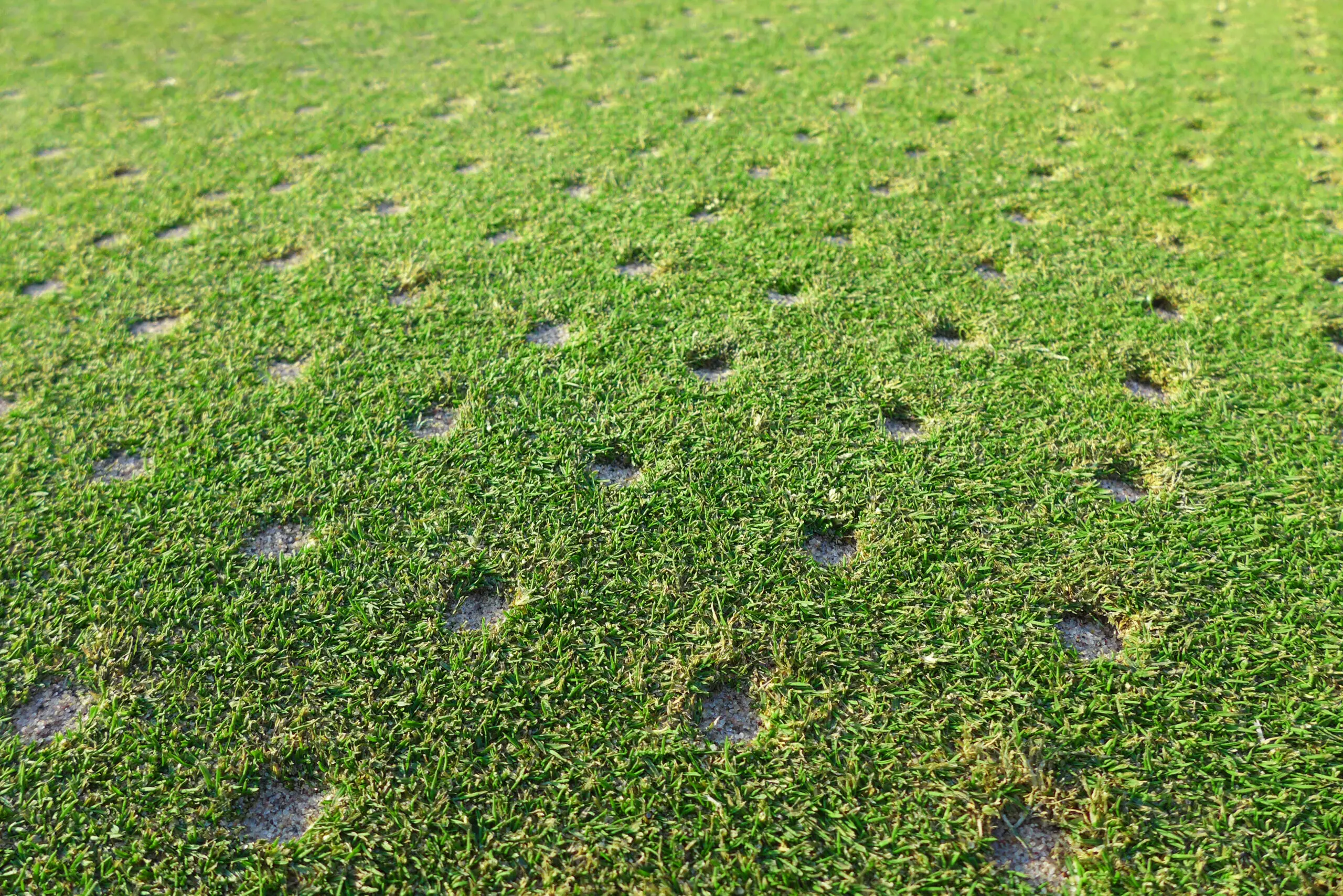

If your grass looks thin, patchy, or weak, you’ve probably come across the idea of lawn aeration. But once you start researching, you’ll see two main types of aeration: core aeration and spike aeration.
At first glance, they might seem similar—both create holes in the lawn to relieve compaction. But the way they work, the cost, and the results are very different. Here’s a breakdown to help you choose the right service for your lawn.
What Is Core Aeration?
Core aeration (also called plug aeration) uses a machine with hollow tines to pull plugs of soil out of the lawn. These plugs break down over time, leaving behind small holes that allow air, water, and nutrients to reach the roots.
This method is the gold standard for Ontario lawns, especially those with heavy clay soils.
Benefits include:
- Deep, long-lasting relief of soil compaction
- Better water absorption and root growth
- Creates perfect conditions for overseeding
- Improves lawn health for months, not just days

What Is Spike Aeration?
Spike aeration uses solid tines or spikes to punch holes into the ground without removing any soil. It’s sometimes done with spiked shoes, manual tools, or roller-style machines.
While it’s cheaper and easier, spike aeration can actually make compaction worse in the long run. By pushing soil sideways, it creates temporary openings but compresses surrounding soil tighter.
Benefits include:
- Faster and less expensive than core aeration
- Provides short-term improvement in drainage
- Can be done quickly with basic equipment
Limitations include:
- Does not remove compaction long-term
- Holes close up quickly, especially in clay soil
- Not recommended for heavily used or stressed lawns

Core vs Spike Aeration: Side-by-Side Comparison
| Feature | Core Aeration | Spike Aeration |
|---|---|---|
| Method | Removes plugs of soil | Pushes spikes into soil |
| Effectiveness | Long-term relief of compaction | Temporary improvement only |
| Best For | Clay soils, compacted lawns, overseeding prep | Sandy soils or light-use lawns |
| Results Last | 6–12 months | Days to weeks |
| Cost (Ontario average) | $100–$250 per service | $50–$150 per service |
| Drawbacks | Requires professional equipment | Can increase compaction in clay soils |
Which One Should You Choose?
If you’re in Ontario, the answer is almost always core aeration. The region’s clay-heavy soil needs plugs removed to truly relieve compaction. Core aeration also sets the stage for overseeding and fertilizing, making it a better investment overall.
Spike aeration might be okay for sandy soils or as a quick DIY fix, but for long-term results, it just doesn’t compare.
Final Word
Both methods are technically “aeration,” but the results are very different. Core aeration gives your lawn lasting relief, deeper roots, and healthier growth, while spike aeration offers only short-term benefits.
If you want to thicken up your grass, solve compaction, and get the most value for your money, core aeration is the clear winner.